
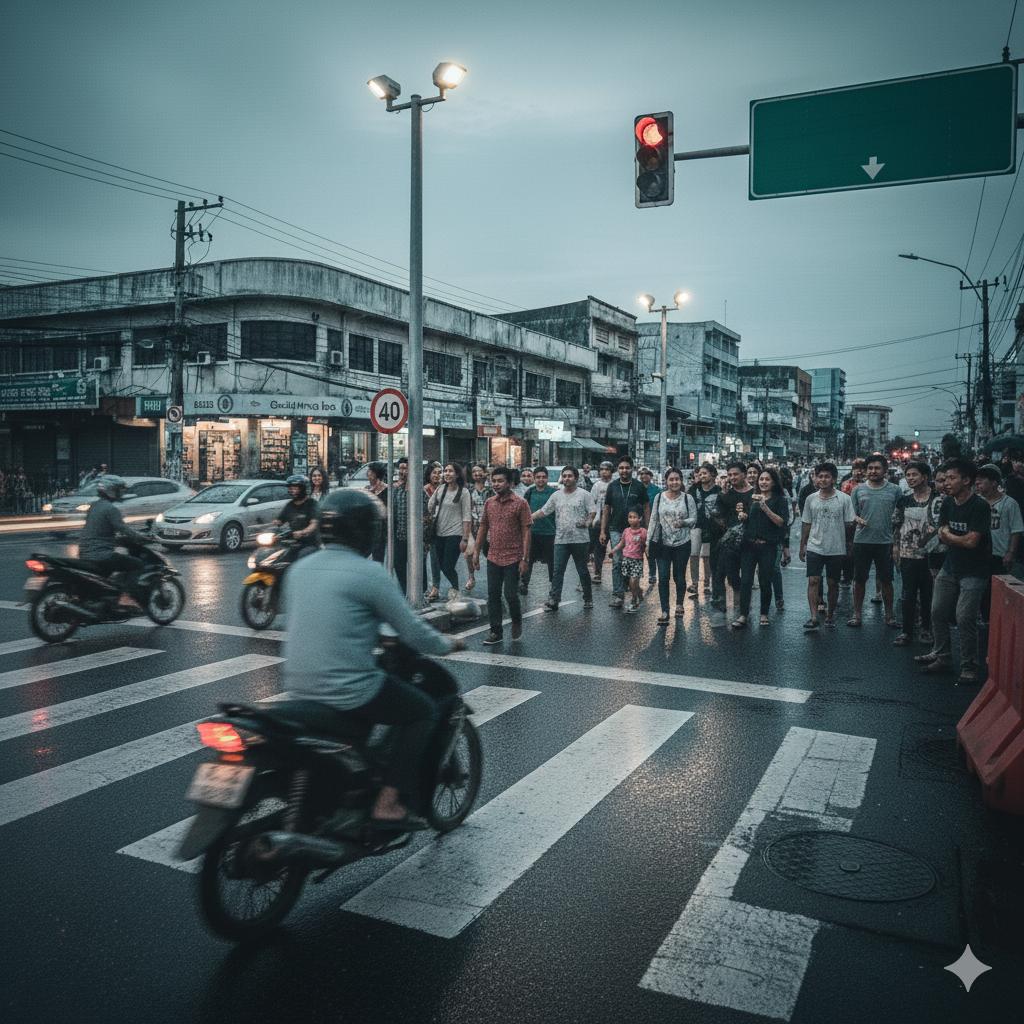
I was walking along a road in Gusa, near an intersection with a traffic light just before CUMC. It was an ordinary day. I was on the pedestrian side of the road when, without warning, I heard a loud metallic sound bouncing violently behind me. I turned around and saw a large water container rolling uncontrollably across the road.
About twenty meters away, a young woman was lying on the ground, her body shaking uncontrollably. Moments later, a motorcycle sped past, clearly moving fast and clearly disregarding the red traffic light. It became immediately clear what had happened: the motorcycle had struck the woman while she was crossing properly on the pedestrian lane.
There was no confusion. No gray area. A red light was ignored, and a life was put at serious risk.
That moment stayed with me.
Since then, I have become far more cautious, especially when crossing the road with my wife and daughter. Even when the pedestrian signal is on, even when we are clearly within the crosswalk, I no longer assume safety. I assume risk.
That experience made something very clear to me: we do not just have a traffic congestion problem, we have a behavior and enforcement problem. And it is getting worse.
Traffic Discipline Is a Management Issue
From a management standpoint, traffic discipline works like any large operational system. When rules are clear but enforcement is inconsistent, compliance erodes. When implementors are unsupported, unmonitored, or inconsistently deployed, violations increase.
This proposal does not aim to complain or dramatize the issue. It aims to offer logical, implementable solutions, focused primarily on how traffic rules are enforced.
Because good rules without strong execution do not save lives.
Run Traffic Enforcement Like a Core Operation
In any organization, inconsistency leads to failure.
Traffic enforcement in Cagayan de Oro must be predictable, visible, and routine. Enforcement should not rely on special campaigns or reactionary deployments after accidents occur. High-risk intersections, pedestrian-heavy zones, and peak hours should have fixed, daily enforcement presence.
When motorists know enforcement is consistent, behavior changes, even without heavier penalties.
Focus Enforcement on Life-Threatening Violations
Good management prioritizes risk.
Traffic implementors should focus on violations that directly lead to injuries and fatalities:
- Running red lights
- Speeding
- Counterflow and reckless overtaking
- Motorcycle helmet and passenger violations
- Drunk or impaired driving
This approach reinforces that enforcement exists to protect people, not merely to issue citations.
Limit Discretion Through Clear Procedures and Technology
Uncontrolled discretion creates inconsistency and mistrust.
Traffic enforcers should follow standardized procedures:
- Clear grounds for apprehension
- Mandatory explanation of violations
- Proper documentation
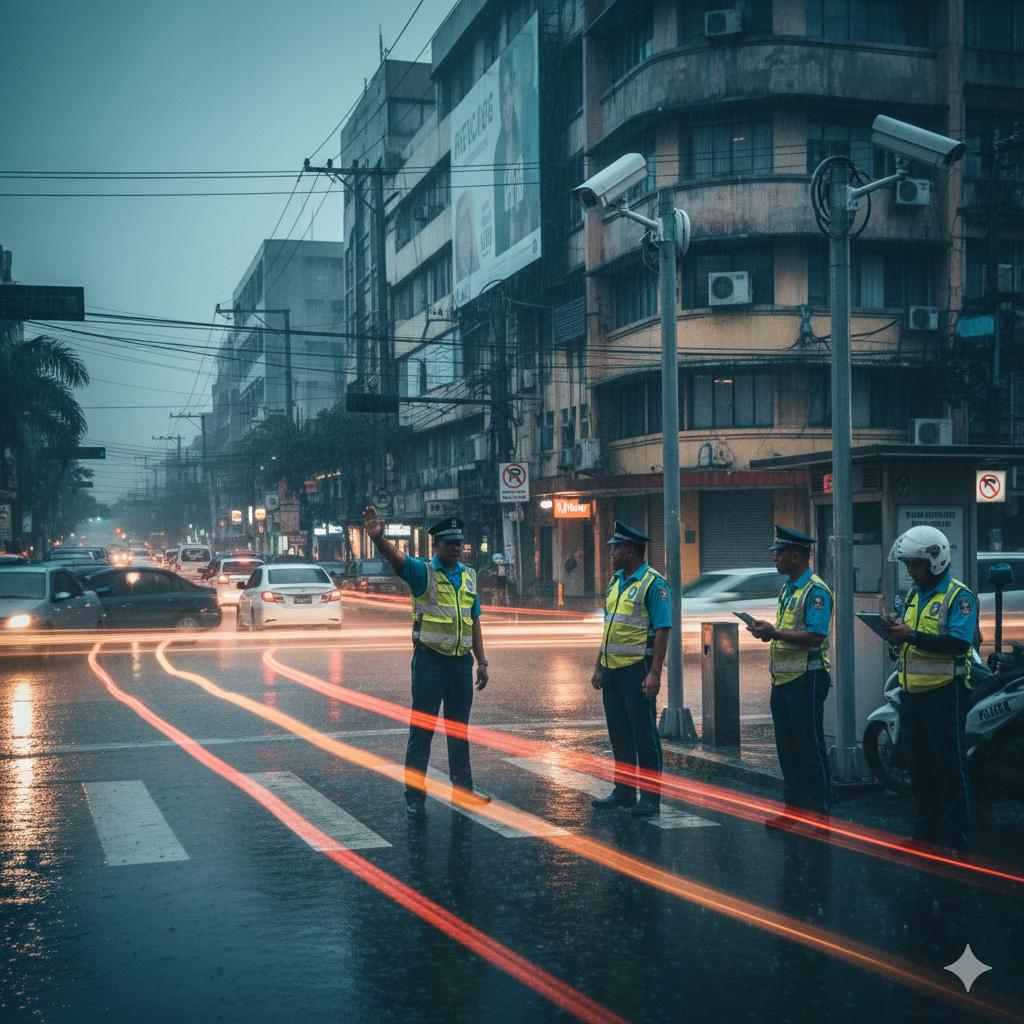
- Use of body cameras, dash cameras, and CCTV where available
Technology should be treated as a management control tool, not a punishment mechanism. It protects citizens, supports enforcers, and strengthens credibility.
Strengthen Accountability of Traffic Rule Implementors
Public discipline will never exceed enforcement discipline.
Traffic implementors should be managed with:
- Clear performance expectations
- Regular supervision and rotation
- Review of citation patterns
- Zero tolerance for roadside negotiations
At the same time, professionalism, courtesy, and integrity should be recognized and reinforced. Accountability is not just corrective, it is developmental.
Align Road Conditions With Enforcement Goals
Systems must support behavior.
Poor lighting, unclear road markings, confusing intersections, and missing pedestrian cues undermine even the best enforcement efforts. Addressing these issues reduces violations before enforcement is even needed.
Well-designed roads guide behavior naturally.
Apply Graduated Consequences for Repeat Violators
From a management lens, repeat non-compliance requires escalation.
A structured approach is logical:
- First offense: penalty and education
- Second offense: higher penalty or points
- Third offense: suspension or impoundment
This sends a clear message: repeated disregard for traffic rules will not be normalized.
Leadership Sets the Tone
Ultimately, traffic discipline reflects leadership.
When traffic rules are enforced fairly, consistently, and without exception, professionals, young and old, respond positively. People comply with systems they believe are logical, predictable, and well-managed.
The incident I witnessed in Gusa was not an isolated case, it was a warning.
Reducing traffic violations in Cagayan de Oro City does not require drama or outrage. It requires structured management, accountable implementation, and consistent leadership.
If we treat traffic enforcement as the serious public safety operation that it is, we can change behavior, prevent tragedies, and ensure that crossing the street, especially with our families, does not feel like a calculated risk.
Safe roads are not achieved by chance. They are built through discipline, systems, and leadership.