Preparing a Technical Engineering Report (TER) for the Professional Mechanical Engineer qualification under the Professional Regulation Commission is not simply an academic exercise—it is a professional statement. It is your proof of experience, competence, and accountability as an engineer.
Drawing from the perspective of Wellert G. Eguia, a, Master Plumber, and Professional Mechanical Engineer with extensive experience in food manufacturing including industrial services, the following are the top qualities that define an outstanding TER.
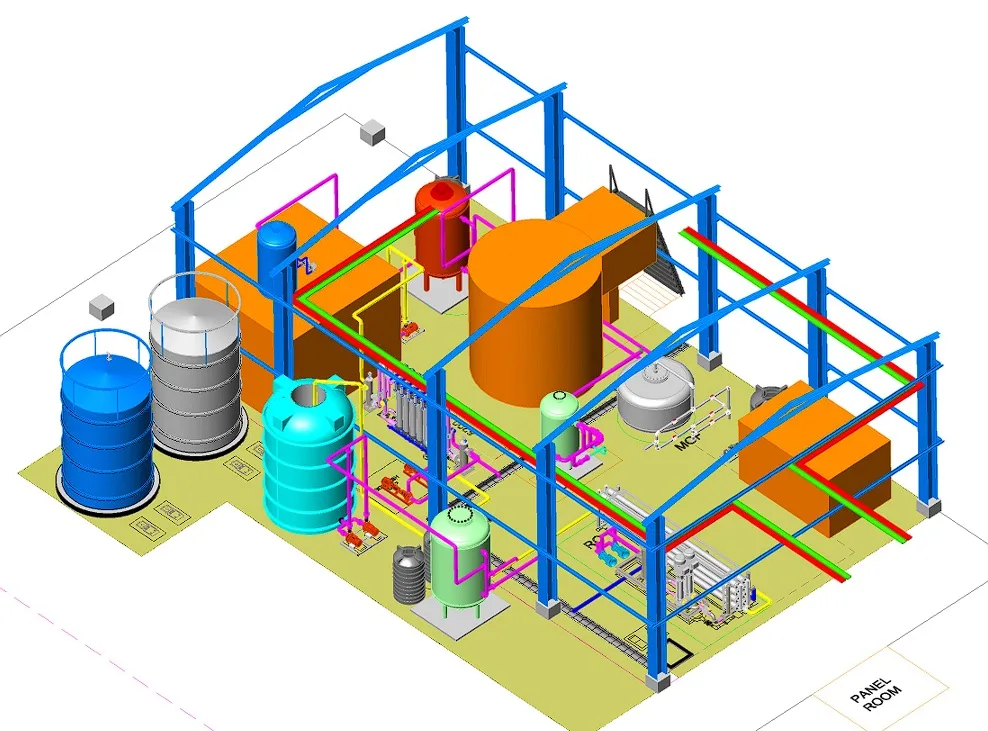
With years of experience in one of the country’s most recognized food manufacturing organizations, and now contributing internationally in the same industry, he has handled projects from capacity increase, energy saving projects and increase line performance where downtime translates directly to significant production loss. His career spans maintenance, planning, project engineering, and line technical operations—managing mechanical improvements end-to-end, from basic engineering design through construction, commissioning, and turnover. At the core of his professional journey is a clear commitment to continuous self-development and raising his standards year after year.
From that depth of experience, here are the essential elements of a strong TER.
1. Demonstrate Clear Understanding of the Subject
A TER must reflect deep and structured understanding. It is not enough to describe a project—you must show experience of the principles behind it.
This means:
- Explaining why decisions were made
- Demonstrating command of mechanical theory
- Connecting calculations, design choices, and outcomes
Your report should clearly show that you were not merely involved— you understood the project concept, engineering principles, and the business impact..
2. Choose a Topic That Reflects Your Specialty
A powerful TER often centers on a field where you see yourself building long-term expertise.
Your chosen subject should:
- Align with your professional strengths
- Reflect projects where you exercised independent competence
- Represent work you can confidently defend in detail
When the topic genuinely interests you, the technical depth and clarity become natural. The Board can sense whether a report reflects ownership or surface-level participation.
3. Ensure Access to Technical Information
A TER must be technically grounded. That requires access to:
- Design data
- Equipment specifications
- Calculations and performance metrics
- Operational results
Without sufficient technical documentation, your report risks becoming narrative instead of analytical. A strong TER integrates real data with engineering reasoning.
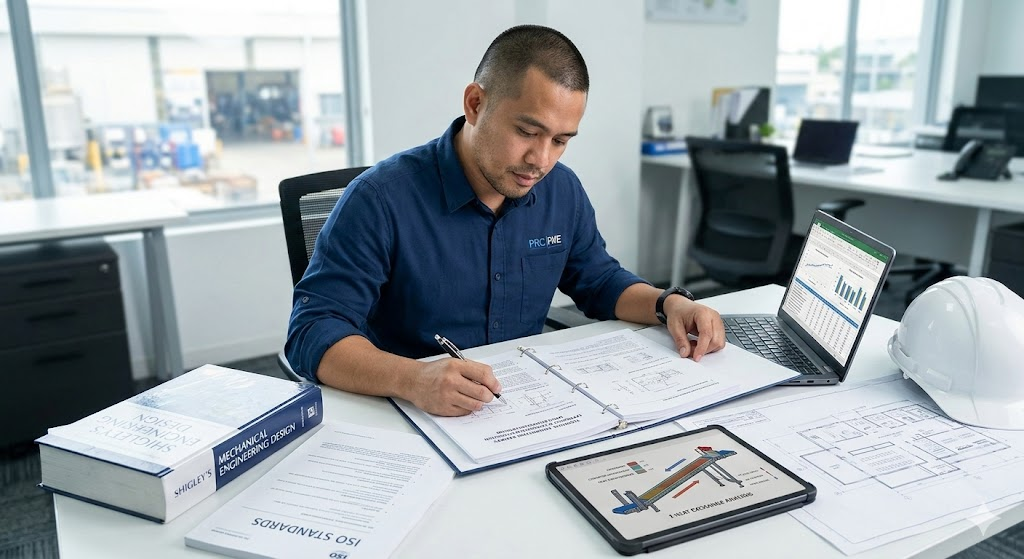
4. Must use reliable books as references.
Credibility matters.
Reliable references strengthen your technical arguments and demonstrate disciplined engineering practice. While various sources may be cited, authoritative books and established engineering standards carry significant weight.
Referencing foundational mechanical engineering principles reinforces that your solutions are not opinion-based but grounded in recognized engineering knowledge.
5. Highlight Measurable Impact
Engineering is ultimately about results.
A strong TER clearly demonstrates measurable value such as:
- Cost savings
- Line capacity increase
- Efficiency improvement
- Downtime reduction
- Environmental emission reduction or carbon footprint improvement
In high-utilization manufacturing environments, even small efficiency gains can have substantial operational impact. The report should quantify improvements wherever possible. Numbers provide credibility.
6. Tell the Story Clearly
Despite its technical nature, a TER must read clearly and logically.
Think of it as structured storytelling:
- What was the problem?
- What is the impact of the problem?
- What is the financial payback of the project?
- What solution was designed?
- How long will it take to implement?
- What were the results?
Clarity reflects understanding on the basic foundation and its application. The ability to communicate complex engineering concepts in an understandable manner is a defining quality of a Professional Mechanical Engineer.

7. Make the Report a Complete Engineering Package
A strong Technical Engineering Report must be comprehensive. It should not focus on a single isolated aspect of a project while neglecting other critical engineering dimensions.
A well-developed report demonstrates integration across key mechanical engineering disciplines, such as:
- Machine design
- Thermal engineering principles
- Industrial engineering considerations
Engineering solutions in real-world projects rarely operate within one narrow field. A capacity increase project, for example, may involve mechanical component redesign, heat transfer analysis, system efficiency evaluation, workflow impact, and maintenance implications.
The Board expects to see that you understand how these disciplines connect.
Your Technical Engineering Report should reflect a holistic engineering approach—showing that you can analyze, design, optimize, and implement solutions that are technically sound, operationally practical, and economically viable.
A complete package demonstrates maturity. It shows that you are not only solving a problem—but engineering a sustainable solution from end to end.
Final Reflection
A Technical Engineering Report is more than a requirement—it is a reflection of who you are as an engineer.
From hands-on technical work to leading mechanical improvements in high-impact manufacturing operations, the lessons are consistent: understand deeply, specialize intentionally, ground your work in solid references, quantify results, and communicate with clarity.
Above all, continuous improvement matters. The mindset of pushing yourself to become better each year—technically, professionally, and personally—is what ultimately elevates a Mechanical Engineer to the level of Professional Mechanical Engineer.
A strong TER does not just describe work completed.
It demonstrates engineering discipline gearing towards a safe and sustainable impact to businesses and communities.